
Why does every application require a specific hose?
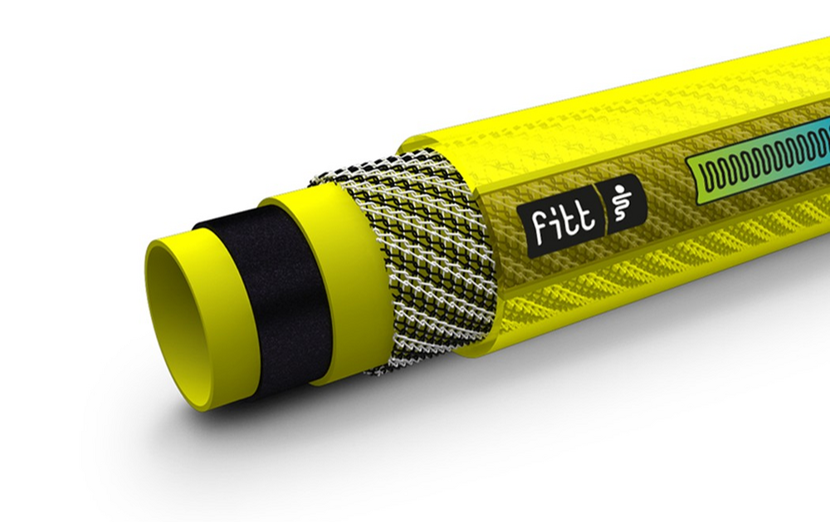
Deck wash hoses, sanitary hoses, fuel hoses, drinking water hoses, suction and discharge hoses... Just a quick glance at Hoenderop’s extensive hose range. Hoenderop stocks a hose for every purpose. But with such a wide selection in the webshop, one might wonder: why is it necessary to have a specific hose for every use on board? And which brand hose is best for each application?
“Every ship has various hoses on board, including deck wash hoses, a fuel hose, an air hose, and a radiator hose to connect the pipes,” says Patrick Gerritsma, account manager at Hoenderop. Having been an inland skipper himself, Patrick is familiar with the many uses of hoses. According to Patrick, there are three key factors to consider when choosing the right hose:
- What is the hose’s intended use?
- Where and under what conditions will the hose be used?
- What do you personally prefer in terms of look and feel?
For example, when it comes to deck washing, the hose only needs to carry water. In the summer, most deck wash hoses will do the job, according to Patrick. “But maybe you find the yellow Fitt Tobby or Tricoflex hose too bright and prefer the grey Fitt Profi hose instead. Or perhaps you do like the bright colors. In winter, however, a consideration is that the Tricoflex hose can become stiff. This doesn’t happen with the Fitt Goldtek, which stays flexible in cold temperatures, just like the Python hoses. It’s important to consider when you’ll be using the hose to make the right choice.”
Suction/pressure hose
The application for which you’ll use the hose is equally important. For pumping out the hold, the suction/pressure hose or the extra flexible suction/pressure hose, both from Fitt, are the best choices. Patrick says: “These hoses are equipped with a PVC spiral. When the hose is passed ‘over the pine tree’ (the raised edge of the ship’s hold), it won’t get crushed.”

There isn’t just one answer to why it’s essential to use specific hoses for certain purposes. It mainly boils down to:
Safety: Many tasks on board involve safety standards. Using the right hose prevents accidents and ensures the safety of the crew and surroundings.
Performance: Incorrect hoses can lead to pressure loss, leaks, or even malfunctions.
Cost savings: Specialized hoses are often more expensive initially but cost less in the long run due to their durability.
A simple example of the first two reasons is the fuel hose. “If you use the wrong hose for transferring gasoline or diesel, it can become soft. The hose could ‘disintegrate,’ causing serious risks. Leaks or hose fragments ending up in the tank or engine could cause a lot of problems,” the account manager explains.
Odor-absorbing hose
In terms of cost savings, the sanitary hose is a good example. “If you use an ordinary hose for greywater (shower water), you might use it for a while. But since some water always remains in the hose, it will eventually start to smell. For blackwater (toilet water), this happens even more quickly. You’d have to replace a regular hose within a year, mainly because of the urine odor. The Fitt Diamond hose is the solution. It’s odor-proof and, while more expensive than a regular hose, it lasts much longer.”
While the applications for which hoses are used and the conditions on board are important, ultimately, it also comes down to what you personally find convenient. For years, Fitt’s best-selling hose has been the Metalflex. Why? “Because it’s transparent, so you can see if the liquid is flowing and the pump is working,” Patrick explains. “It’s very simple, but convenience like this is often the deciding factor when choosing the best hose for you.”